
When it comes to Internet privacy, device security, data safety, and others are now nomadic and lore. Even if the user tries to limit themselves, it is always possible that in one way or another, at least a small part of the data stored on a device ends up being stored in the cloud. Data breaches are rife and increasing. Fortunately, the privacy settings and options to customize it on Windows PCs are some of the finest. So, read our comprehensive that will help you protect your privacy in Windows 11.
- Settings You Should Change to Protect Your Privacy in Windows 11
- Change General Privacy Settings
- Turn Off Online Speech Recognition
- Disable Sending of Diagnostic Data
- Turn Off Suggestion Notifications
- Disable Activity History
- Turn Off Share Across Devices
- Disable Location Permission
- Change Camera and Mic Permissions in Windows 11
- Enable Encrypted DNS
- Move to a Local Account
- Disable Cortana
- Do Not Use OneDrive
- Delete Microsoft Cloud Data
- Keeping Windows OS Updated
- Setup Login Options
- Dynamic Lock
Settings You Should Change to Protect Your Privacy in Windows 11
Here are some solutions that you can implement to improve Windows 11 security. These will protect your device against any kind of security lapse as performing these would prevent data and information on the device from being stored on cloud servers. It will also deactivate Microsoft’s access to personal data without your consent.
1. Change General Privacy Settings
General privacy settings are related to relevant ads and recommendations, suggestions, language preferences, and what not. Windows creates an Advertising ID that sends appropriate suggestive ads and it is unique to every user based on their searches and lookouts. Turning this off does not remove ads but creates a barrier for the browser or the OS to peep into your private zone of interest. To modify the General Privacy settings:
Launch Settings on your Windows 11 PC.
Move to Privacy & security from the sidebar.
Click on General under the Windows permissions section.

- Toggle to turn off and disable all permissions given to Windows to track your app , track launches , learn about your interests , and show personalized ads based on that. Additionally, it blocks websites from accessing your default language.

2. Turn Off Online Speech Recognition
Windows 11 got the new Voice Typing and Voice access features in its operating system that use Microsoft’s online speech recognition to execute commands and enable dictation as well. Turning this off prevents Microsoft from sending data to the cloud storage. Hence, as a result, protect your privacy in Windows 11 operating system.
Launch Settings on your PC and move to Privacy & Security.
Scroll and click on Speech .

- Toggle to turn off and disable Online speech recognition .

3. Disable Sending of Diagnostic Data
Microsoft saves a limited amount of default data diagnosed from the PCs of users to ensure Windows 11 security as well as keep the OS up to date. However, there is a set of optional diagnostic data that lets your browsing history, use of an app or feature, and things like this be diagnosed. As said, this is optional diagnostic data, on your choice you can opt to turn that off from being accessed and sent by Microsoft.
Click on Privacy & security .
Navigate to Diagnostics & feedback and click on it.

- Expand the Diagnostic data section and toggle to disable Send optional diagnostic data .

4. Turn Off Suggestion Notifications
Wouldn’t you agree that notifications, whether they come from a smartphone or a computer, are already bothersome? With the availability and usage of more and more apps on your Windows PC, the notification chimes are quite more than before. Moreover, it adds up with Windows suggestions and tips, basically, Microsoft ads trying to plug their programs in. A sigh of relief that the developers chose to provide an easy way to block the notifications or ads in disguise for suggestions. Disabling a few off notifications could restrict and protect your privacy in Windows 11.
Launch settings on your PC and click on System .
Click on Notifications .

- Scroll down to the bottom and uncheck the following:
- Show the Windows welcome experience after updates and when signed in to show what’s new and suggested
- Get tips and suggestions when using Windows

5. Disable Activity History
The Timeline feature, later renamed as Activity History to keep a track of all user activity on the PC was introduced in Windows 10. In Windows 11, it was modified so that there is no timeline to display the user’s activity on the PC, however, Microsoft still stores the activities details. By default, the data is stored on the computer locally but can be synced to the cloud in case a user decides to sign in to the Microsoft account. For Windows 11 privacy settings and to protect your data on Windows 11, you should disable this feature.
Launch Windows settings and go to Privacy & security .
Click on Activity history in the right pane.

Toggle and Disable Store my activity history on this device .
Click on Clear history to remove all the activity history stored earlier.

6. Turn Off Share Across Devices
Windows 11 has this feature to sync data and app activity across all the PCs and smartphones that you are signed into. This feature helps the user to access data on using multiple devices or shifting from one device to another. You may turn it off if you doubt this to be a security risk.
Open Settings and click on Apps .
Click on Advanced app settings .

Click on Share across devices .
Select Off .

7. Disable Location Permission
Location undeniably is a highly sensitive data and vulnerable information to be handled. While devices tend to enable location services for functionalities such as GPS, tracking, nearby places, etc, sharing it might not always be a good idea. Blocking access to the location on Windows 11 isn’t a mess. However, ensure that disabling location services altogether on Windows 11 prevents searching and finding the device in case of a threat. So, we would suggest you keep the location permission enabled for apps that definitely need it.
- In the Privacy & security menu, scroll down and click on Location .

Grant permissions to the apps that need it as per your engagement and remove permission from the rest of the unwanted apps.
You can also turn off the Location services completely with the toggle.

8. Change Camera and Mic Permissions in Windows 11
The camera and mic permissions are vital and there is a need to stop apps from accessing the camera and microphone in the background without your knowledge, in order to make your system private and better. This is one of the settings to protect your privacy on Windows 11 that cannot be ignored.
Launch the Windows settings .
Click on Privacy & security in the left pane.
To first manage permissions for the camera, on the right, click on the Camera option.

Toggle to disable the camera access entirely .
If you want you can choose to toggle off the selected apps you want not to access camera on your device.

- Similarly, follow the same steps for Microphone access .

9. Enable Encrypted DNS
Encryption created to the web traffic on your Windows 11 device ensures an additional security layer. Encrypted DNS (DNS-over-HTTPS) is a common standard to encrypt DNS queries. The exchange between the server of a website and a DNS server stays unencrypted, thereby turning a potential source of risk of leakage. Therefore, this needs to be encrypted to protect your privacy in Windows 11. Read our guide on How to Enable DNS over HTTPS in Chrome .
10. Move to a Local Account
A local account is an offline account that can be used to log in to your PC. The accounts-related information is stored locally on the computer rather than being shared by Microsoft or stored in the cloud. So, the user gets more control over Microsoft services. Switching from an online account to a local account ensures more privacy for all the data on your PC. Refer to our guide on How to Create a Local Account in Windows 11 .

11. Disable Cortana
Cortana is Microsoft’s digital assistant. If you use Cortana then you should be aware that it has all the information about your location, residence, workplace, timings, routes, and what not. The presence of this information in the app turns into a grave concern over privacy and security threats. In, Windows 11 it is not enabled by default and we suggest you not turn it on as well. If it is turned on, sign out of it and turn it off. This will improve your Windows 11 privacy settings.

12. Do Not Use OneDrive
This solution is for people who are extremely cautious about how to protect your privacy in Windows 11. The anxious users who do not like to sync their data and files to Microsoft’s OneDrive cloud storage service can stop using the service. Although the user cannot Uninstall the OneDrive in any way, these are the steps that can be performed to avoid syncing files.
- Right-click on the OneDrive icon on the notification tray on the taskbar.

Click on the gear icon at the top-right corner of the pop-up.
Choose Settings from the dropdown menu.

Move to the Accounts tab .
Click on Unlink this PC .

13. Delete Microsoft Cloud Data
After all the clearing and disabling steps, you have been through until these steps, even now Microsoft keeps a track of all your data and sends it back to its server. No matter what their excuse is for using this data to improve products and services, personalize your online experience, understand your behavior, serve targeted ads, and deliver better recommendations. You can delete all the cloud data, including location activity, browsing history collected from Edge or Windows Search, apps and services, media activity, and performance data.
Click on the link to open Microsoft’s privacy dashboard .
Sign in with the Microsoft account linked to your Windows 11 PC.

Expand the Location activity section.
Click on Clear all location activity .

- Now, the browsing history stores information about all the websites you have visited using the Microsoft Edge browser. If you are looking to protect your privacy in Windows 11, expand Browsing history and click on Clear all browsing activity .

The search history stores information on all the searches made using Bing Search, Windows Search, Cortana, etc. Expand Search history .
Click on Clear all search history .

- Expand App and service activity and click on Clear all app and service activity .

- In the same way, clear Media activity and App and service performance data . This ensures that all the personal data from Microsoft’s cloud server gets deleted.

Some Security Settings in Windows
Finally, we have also listed some of these basic level security settings in Windows that you need to change or follow on your device to ensure it stays secure internally and also that it cannot be accessed by anyone other than you, without your willingness.
14. Keeping Windows OS Updated
In general, security issues on any OS result from a security breach caused by any app or program, or from being hacked by a bug or malware. Keeping the software updated makes the system less vulnerable to external threats and protects it with the latest security patches. You can go through our article on How to Download and Install Optional Updates in Windows 11 .
15. Setup Login Options
With the introduction of Windows Hello, the experience of logging in to the Windows device has enhanced. Options to log into the PC using a fingerprint or through the Facial recognition feature using the webcam are now enabled on Windows. These are unquestionably more secure ways to keep the device protected from being used by someone else in your absence.
Launch the settings app on your Windows PC.
Navigate to Accounts in the left pane. Scroll through the right pane and click on Sign-in options .

- Set up and enable Fingerprint recognition and Facial Recognition on your PC.

16. Dynamic Lock
Dynamic Lock on Windows is a feature that locks the computer when the connected Bluetooth device, preferably a phone or a wearable, goes out of range and disconnects from Windows. This is a feature when Windows creates a trusted device connecting to which via Bluetooth automatically enables the sign-in with the PC and on being away from the trusted source, signs out and locks the PC. To enable Dynamic lock in Windows 11 security settings follow these steps;
In the Settings of your PC, click on Accounts on the left pane.
Click on Sign-in options as done earlier.
Click on Dynamic Lock and enable it.

Recommended: Disable Data Collection in Windows 10 (Protect Your Privacy)
The HomeGroup feature of Windows allowed users to share files and resources with other Windows computers over a small network, say their home or office network. With HomeGroup, users could easily share documents, images, media, printers, etc. over a local network easily. However, Microsoft removed this feature from Windows 10 (Version 1803) , which is why after this update, HomeGroup won’t appear in File Explorer, Control Panel or the Troubleshoot screen from this version onwards. Users will no longer be able to share their resources over a network using HomeGroup, but some other Windows will provide file and printer sharing options.

Note that the previously shared files or printers will still be available and will continue to be shared. You can access them through File Explorer. Type the name of the computer and the shared folder name in the following format: \homePC\SharedFolderName. Additionally, you can still access any shared printers through the Print dialog box.
Also, note that the HomeGroup option will still appear when you right-click on a file and select ‘Give access to’. However, it won’t do anything if you click on it.
In this article, we will talk about how you can share files and printers without HomeGroup.
- Share files and printers without HomeGroup on Windows 10
- Method 1: Use an App to Share
- Method 2: Use Onedrive
- Method 3: Share over a Network
- Share Your Files Or Folders
- Access The Shared Folder
- In Case Of Problem
- Sharing Printers
- Connect The Devices To This Printer
Share files and printers without HomeGroup on Windows 10
In the absence of HomeGroup, you can share files using one of the three given methods:
Method 1: Use an App to Share
If you want to share files with someone only a few times and wouldn’t require a regular connection, you can use the Windows Share functionality. To share files using this method,
Go to File Explorer.
Locate the folder where the file you want to share is present.
Select one or more files you want to share . You can share multiple files by pressing down the Ctrl key while selecting files.
Now, click on the ‘ Share ’ tab.
Click on ‘ Share ’.

- Choose the app that you want to share your file through.

Follow any further instructions provided.
Your file will be shared.
You can also send the selected files as an email by clicking on the Email in the Share tab.
Method 2: Use Onedrive
You can also share your OneDrive files saved on your PC. For this,
Go to File Explorer.
Move on to the OneDrive folder where the files you want to share are located.
Right-click on the file that you want to share.
Select ‘ Share a OneDrive link ’.

On doing this, a link to your file will be created and placed on your clipboard.
You can paste and send this link through your desired service like email.
Your file will be shared.
You can also right-click on your file and select ‘ More OneDrive sharing options ’ to configure expiration date, password, edit access, etc.
Method 3: Share over a Network
To share files over a local network, you can use this method. Before, sharing your files over a network, you will have to enable file and printer sharing options.
Enable Network Discovery And Sharing Options
To enable the sharing options,
Click on the Start button on your taskbar.
Click on the gear icon to open Settings.

Click on ‘Network & Internet’ in the settings window.
Click on ‘Sharing options’ .

The advanced sharing settings window will open.
Under the ‘ Private ’ section, click on the radio button for ‘Turn on Network discovery’ .
Ensure that ‘ Turn on automatic setup of networked connected devices ’ checkbox is also checked.

Also enable the ‘ Turn on file and printer sharing ’ radio button.
Further, expand the ‘All Networks’ block.
You can optionally turn on ‘ Public folder sharing ’ if you want people on your home network to be able to access or modify your default public folders.
You can also choose to enable password protected sharing if you need it.

Click on ‘Save changes’ .
Network discovery will be enabled on your computer.
Follow the same steps on each computer on your local network.
All the computers on your network will appear in the ‘ Network’ section of your File Explorer.

Share Your Files Or Folders
Once you have configured these settings on all your desired computers, you can share your files by following the steps below:
Go to File Explorer.
Go to the location of your file or folder that you want to share and right-click on it and select ‘Give access to’ from the menu. Click on ‘Specific people…’

- In the ‘Network access’ window, select the users that you want to share your folder with. If you select a specific user, then the user will have to provide the username and password to access the resource or the user should be logged in to an account with the same credentials on their device. If you select ‘ everyone ’ in the drop-down list, then your resource will be shared with everyone without having to enter credentials.

Click on the Add button after selecting the desired users.
To decide the access permissions, click on the drop-down menu under the ‘Permission Level’ column. Choose read if you want the user to only view the file and not modify it. Select read/write if you want the user to be able to read and make changes to the shared file.

Click on Share .
You will be given the link to the folder.

Note that other devices will be able to access the shared content only if the sharing device is active and connected to the network.
Access The Shared Folder
To access this shared content from some other device you should
Open File Explorer.
Copy and paste the shared link in the address bar.
Or,
Open File Explorer and navigate to the ‘Network’ folder.
Here, you will see the list of connected devices and their shared content or resources.
In Case Of Problem
If you are not able to access the shared content, it is possible that your device is not able to map the computer name of the sharing computer to its IP address . In such a case, you should replace the computer name in the path link directly with its IP address. You will find it in the ‘Network & Internet’ section of settings, under ‘ View your network properties ’.

If the problem persists, it is possible that your device’s firewall is blocking it. To see if this is the problem, you can temporarily disable the firewall on both the devices and try accessing the shared content then. To disable the firewall,
Open Settings.
Go to ‘Update & Security’ .
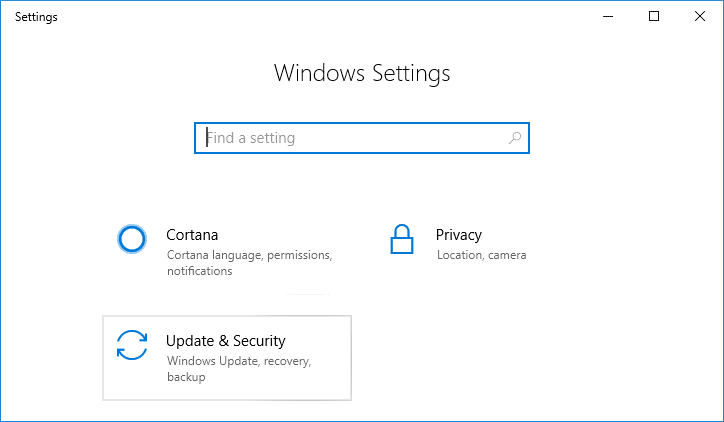
Click on the ‘Windows Security’ from the left pane.
Click on ‘Firewall & network protection’ under Protection areas.

- Windows Defender Security Center window will open . Click on ‘Private network’ under Firewall & network protection heading.

- Next, disable the toggle under Windows Defender Firewall.

Now, if you can access the shared content, it means that the problem was being caused by the firewall. To fix this,
Open Windows Defender Security Center window as above.
Click on Allow an app through a firewall.

- Ensure that ‘file and printer sharing’ is enabled for the private network.

Sharing Printers
Note that file and printer sharing options should be enabled on your computer. The steps for the same have been already discussed above.
To share with other users on a local network,
- Open settings by clicking on the gear icon in the Start menu. Click on ‘Devices’ .

- Select ‘Printers & scanners’ from the left pane. Select the printer you want to share and click on ‘Manage’ .

Click on ‘Printer properties’ . In the properties window, switch to the Sharing tab.
Type an identification name for this printer.

- Click on Apply. Then click on OK.
Recommended: How To Setup Network Files Sharing On Windows 10
Connect The Devices To This Printer
Open Settings by clicking on the gear icon in the Start menu .
Click on ‘Devices’ .
Select ‘Printers & scanners’ from the left pane.
Click on ‘Add a printer or scanner’ .

- If the printer does not appear, click on ‘The printer that I want isn’t listed’ .

- Click on ‘Select a shared printer by name’ and click on Browse.

Double click on the computer which is sharing the printer. If you don’t know the name of the computer, go to settings on that computer. Type the computer name in the search box and select ‘View your PC name’ . You will see the PC (computer) name under the device name.
Select the shared printer.
Click on Select.
Click on Next.

Click on Next again and then click on Finish.
Do the same on all the computers to which you want the printer to be shared.
For a device with an older v ersion of Windows.
Go to Control Panel.
Click on ‘View devices and printers’ under the ‘Hardware and Sound’ category.

Click on ‘Add a printer’ .
Select the printer if it appears and follow the given instructions.
If your printer does not appear, click on ‘The printer that I want isn’t listed’ .

Click on ‘Select a shared printer by name’ and click on Browse.
Double click on the computer which is sharing the printer.
Select the shared printer .
Click on Select.
Click on Next.
Click on Next again and then click on Finish.
Note that other users will be able to access the printer only when the computer sharing the printer is active.
These were a few ways in which you can easily share your files and printers to other computers without using HomeGroup on Windows 10.
