Whenever you connect to a wireless network, either you connect on Private network or Public network. Private network refers to your home or work network where you trust all the other available devices to be connected while public networks are anywhere else, such as coffee shops, etc. Depending on your connection, Windows determine the network. Your network connection determines how your PC will interact with others on the same network.

Here the important point to note is that whenever you first time connects, Windows pops up a box showing you options to choose a public or private network. In that case, sometimes you accidentally choose the wrong label, which can cause security issues for your device. Therefore, it is always necessary to configure the network as per your requirement. So without wasting any time, let’s see How to Change Network Profile in Windows 10 with the help of the below-listed guide.
- Change from Public to Private Network in Windows 10
- Method 1: Change Network Profile on Windows 10
- Change from Public to Private Network in Windows 10
- Method 2: Change Network Profile on Windows 7
- Method 3: Change Network Profile using Local Security Policy
Change from Public to Private Network in Windows 10
Make sure to create a restore point just in case something goes wrong.
Method 1: Change Network Profile on Windows 10
Much before starting the configuration steps, we need to identify the current network type in Windows 10. If you are unaware of the network connection on your system, you need to follow the below-mentioned steps.
Check your Network Type in Windows 10
You need to navigate to Settings > Network & Internet
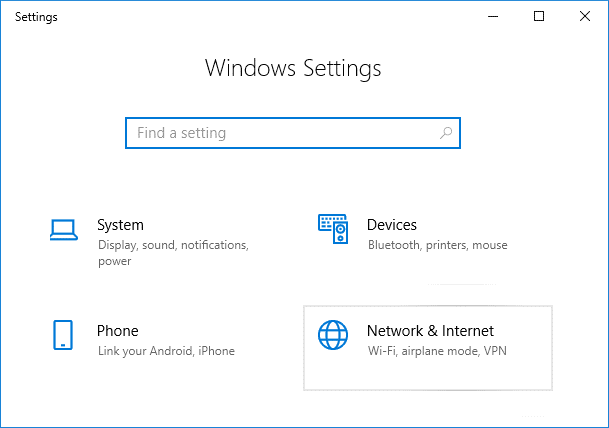
- Once you will click on the Network & Internet option, you will see another window where you need to click on the Status option available on the screen’s sidebar.

Here on the above image, you can see that the public network is showing. Since this is the home network, it should be changed to the private network.
Change from Public to Private Network in Windows 10
- In order to change the network type from Public to Private (or Vice Versa), you need to remain on the same Network & Internet window. On the sidebar of the window, you need to find out the Network connection (Ethernet, Wi-Fi, Dial-up).

Here as per current image, we have selected current network connection: Wi-Fi
Since Microsoft keeps on adding a new feature in Windows, these tips and screenshots reference the most updated version of the Windows.
Once you select the current network connection, you will see a new window with options to choose Private or Public Network.
Now you can choose either Private or Public Network according to your preference and close the setting tab or go back and confirm the status of a change on the connection tab.

Method 2: Change Network Profile on Windows 7
When it comes to Windows 7, you have to follow the below-mentioned steps to identify and change your system’s network profile.
Navigate to control panel from the start menu and click on the “ Network & Sharing center ”
Under the Network & Sharing tab, you will see your active network connection under “ View Your Active Networks ” tab.

- Click on the network profile where you will be prompted to choose the appropriate network. Windows 7 explains each network’s feature properly so that you can read it carefully and then choose the right network type for your connection.

Method 3: Change Network Profile using Local Security Policy
If you cannot use the above mentioned two methods, you have another option to Change from Public to Private Network in Windows 10 by using Local Security Policy. This method is usually the best method for the administrator of the system. With this method, you can force the system to a particular network type and disregard its choice.
Press Windows + R to open Run Dialog box.
Type secpol.msc and press enter to open Local Security Policy.

- Under the Local Security Policy, you need to tap on the “ Network List Manager Policies ” on the left sidebar. Then click on the available network connection type on the right-side panel on your screen.

- Now you need to choose the Private or Public network option under the Location type tab.

Moreover, you have the authority to restrict the users to make the changes in the network type by selecting the option “ User cannot change location ”. You can override the users’ selection of the network type as well with this method.
- Finally click on “Ok” to save all the changes you have made.
Hopefully, the above-mentioned method will help you to choose the most appropriate network type for your device. It is really important to choose the right network type to keep your system connection secured. The third method is basically useful for the system administrator. However, in case you are not able to change the network type by using the first two methods, you can change the Network Profile by using the third method as well.
Recommended:
- How to Switch Between Browser Tabs Using Shortcut Key
- Forcefully Clear the Print Queue in Windows 10
- How to Fix Monitor Screen Flickering Issue
- How to Make One Page Landscape in Word
I hope the above steps were helpful and now you can easily change from Public to Private Network in Windows 10 but if you still have any questions regarding this tutorial then feel free to ask them in the comment’s section.
Forcefully Clear the Print Queue in Windows 10: Many of the printer users might have to face the circumstances where you are trying to print something but nothing happens. The reasons for not printing and the print job getting stuck can be many but there is one frequent cause that is when the printer queue has a stuck with its print jobs. Let me take a scenario where you previously tried to print something, but that time your printer was off. So, you skipped the printing of document at that moment & you forgot about it. Later or after few days, you again plan to give a print; but the job for printing is already listed in the queue and hence, as the queued job didn’t automatically get removed, you current print command will remain at the end of queue and won’t get print printed until all other listed jobs get printed.

There are cases when you can manually go in & remove the print job but this will keep on happening. In such type of scenario, you have to clear your system’s print queue manually following some specific steps. This article will show you how to Forcefully Clear the Print Queue in Windows 10 using the below-listed guide. In case your Microsoft Windows 7, 8, or 10 is having a lengthy list of corrupt print jobs, you can take adequate measure to Forcefully Clear the Print Queue by following the technique mentioned below.
- How to Forcefully Clear the Print Queue in Windows 10
- Method 1: Manually Clear Print Queue
- Method 2: Clear Print Queue Using Command Prompt
How to Forcefully Clear the Print Queue in Windows 10
Make sure to create a restore point just in case something goes wrong.
Method 1: Manually Clear Print Queue
1.Go to Start and search “ Control Panel ”.
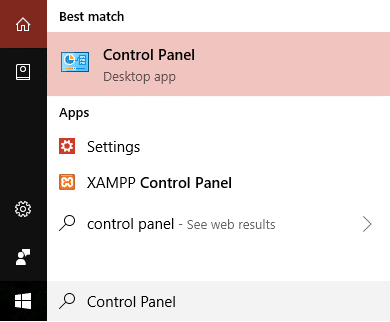
2.From “ Control Panel ”, go to “ Administrative Tools ”.

3.Double click the “ Services ” option. Scroll down in the list to search for “ Print Spooler ” service.

4.Now right-click on Print Spooler service and select “ Stop ”. In order to perform this, you have to be logged in as Administrator-mode.

5.It is to be noted that, at this stage, no user of this system will be able to print anything on any of your printers which are connected to this server.
6.Next, what you have to do is, to visit the following path: C:\Windows\System32\spool\PRINTERS

Alternatively, you can manually type “ %windir%\System32\spool\PRINTERS ” (without quotes) in your system Explorer’s address bar when your C drive is not having the default Windows partition.
7.From that directory, delete all the existing files from that folder . This action of your will clear all print queue jobs from your list. In case you are performing this on a server, it is a better thought to first make certain no other print jobs are in the list for processing, in association with any printers because the above step will also delete those print jobs from the queue as well.
8.One last thing left, is to go back to the “ Services ” window and from there right-click the Print Spooler service & choose “ Start ” for starting the print spooling service back again.

Method 2: Clear Print Queue Using Command Prompt
There is an alternate option also to perform the same entire cleaning queue process. Just you have to use a script, code it and execute it. What you can do is create a batch file (blank notepad > put the batch command > File > Save As > filename.bat as ‘All files’) with any file name (let suppose printspool.bat) and put the below-mentioned commands or you can even type them in the command prompt (cmd) also:
net stop spooler

del %systemroot%\System32\spool\printers\* /Q /F /S

net start spooler

Recommended:
- Logout of Gmail or Google Account Automatically (With Pictures)
- No Sound in Windows 10 PC [SOLVED]
- What is Checksum? And How to Calculate Checksums
- Disable Indexing in Windows 10 (Tutorial)
I hope the above steps were helpful and now you can Forcefully Clear the Print Queue in Windows 10 whenever you want but if you still have any questions regarding this tutorial then feel free to ask them in the comment’s section.
