Fix Can’t adjust screen brightness in Windows 10: If you have recently upgraded to Windows 10 then you may be facing this annoying issue where you can’t adjust the screen brightness , in short, screen brightness settings stopped working. If you try to adjust the brightness using Windows Settings apps, you won’t be able to change anything, as dragging the brightness level up or down will do nothing. Now if you try to adjust brightness using the brightness keys on the keyword then it would display the brightness level going up and down, but nothing would actually happen.
![Fix Can't Adjust Screen Brightness in Windows 10 [SOLVED] - 1](https://techcult.com/wp-content/uploads/2017/09/Fix-Cant-adjust-screen-brightness-in-Windows-10.png)
Why I am unable to adjust screen brightness on Windows 10?
If you have enabled automatic battery management then if the battery starts to become low the brightness will be automatically changed to dim settings. And you won’t be able to adjust the brightness again until you will change the battery management settings or charge your laptop. But the issue can be a number of different things for example corrupted drivers, incorrect battery configuration, ATI bug , etc.
This is quite a common issue which a lot of Windows 10 users are facing right now. This issue can also be caused because of the corrupt or incompatible display driver and thankfully this issue can be easily resolved. So without wasting any more time let’s see how to actually fix can’t adjust screen brightness in Windows 10 with the help of below-listed steps.
- Fix Can’t Adjust Screen Brightness in Windows 10
- Method 1: Update Display Adapter Drivers
- Method 2: Adjust the brightness from Graphics Settings
- Method 3: Adjust screen brightness using Power Options
- Method 4: Enable Generic PnP Monitor
- Method 5: Update Generic PnP Monitor Driver
- Method 6: Update Graphics Card Driver
- Method 7: Delete hidden devices under PnP Monitors
- Method 8: Registry Fix
Fix Can’t Adjust Screen Brightness in Windows 10
Make sure to create a restore point just in case something goes wrong.
Method 1: Update Display Adapter Drivers
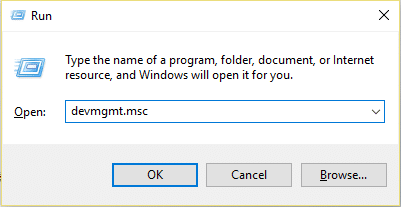
- Press Windows Key + R then type devmgmt.msc and hit Enter to open Device Manager.
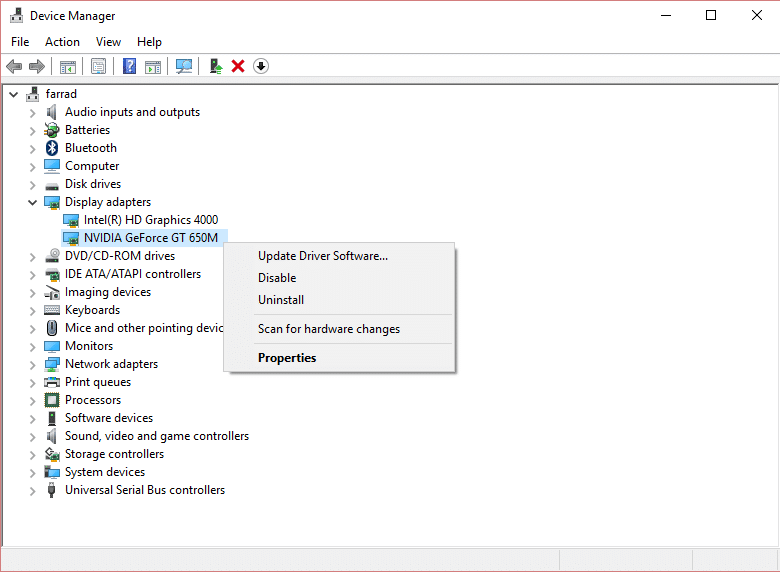
- Expand Display adapters and then right-click on the integrated graphics card and select Update Driver.

Note: The integrated graphics card would be something like Intel HD Graphics 4000.
- Then click Search automatically for updated driver software and let it install the driver automatically.
Note: Make sure you have a good internet connection in order for Windows to automatically download the latest drivers.
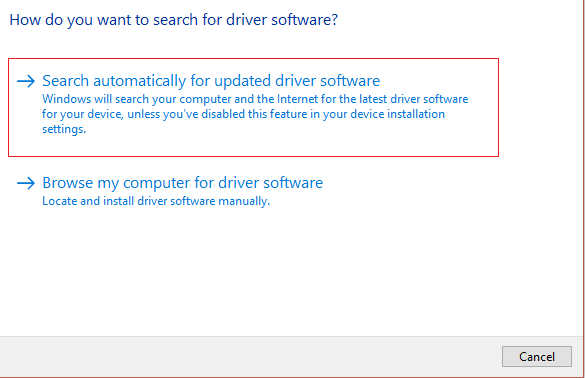
Reboot your PC and see if the issue is resolved or not.
If not then again select Update Driver and this time click on Browse my computer for driver software.
Next, click on Let me pick from a list of available drivers on my computer option at the bottom.

- Now checkmark “ Show compatible hardware ” then from the list select Microsoft Basic Display Adapter and click Next.

- Let it install the basic Microsoft display driver and reboot your PC to save changes.
Method 2: Adjust the brightness from Graphics Settings
- Right-click in an empty area on the desktop then select Intel Graphics Settings.

- Now click on Display from the Intel HD Graphics Control Panel.

From the left-hand menu, select Color Settings.
Adjust the Brightness slider according to your liking and once done, click Apply.

Method 3:Adjust screen brightness using Power Options
- Right-click on the Power icon on the taskbar and select Power Options.

- Now click Change plan settings next to currently active power plan.

- Click Change advanced power settings at the bottom.

From the Advanced settings window, find and expand Display.
Now locate and click each of the following to expand their respective settings:
Display brightness Dimmed display brightness Enable adaptive brightness

Change each of these to the settings you wish, but make sure “ Enable adaptive brightness ” is turned off.
Once done, click Apply followed by OK.
Reboot your PC to save changes.
Method 4: Enable Generic PnP Monitor
- Press Windows Key + R then type devmgmt.msc and hit Enter to open Device Manager.
- Expand Monitors and then right-click on Generic PnP Monitor and select Enable.

- Reboot your PC to save changes and see if you’re able to fix can’t adjust screen brightness in Windows 10 issue.
Method 5: Update Generic PnP Monitor Driver
- Press Windows Key + R then type devmgmt.msc and hit Enter.
- Expand Monitors and then right-click on Generic PnP Monitor and select Update Driver.

- Select Browse my computer for driver software.

- Next, click on Let me pick from a list of available drivers on my computer option at the bottom.
- Now select Generic PnP Monitor and click Next.

- Reboot your PC to save changes and see if you’re able to fix unable to adjust screen brightness on Windows 10 issue.
Method 6: Update Graphics Card Driver
If the Nvidia Graphics drivers are corrupted, outdated or incompatible then you won’t be able to adjust screen brightness in Windows 10. When you update Windows or install a third-party app then it can corrupt the video drivers of your system. In order to resolve this issue, you need to update your graphics card drivers in order to fix the underlying cause. If you face any such issues then you can easily update graphics card drivers with the help of this guide .
Method 7: Delete hidden devices under PnP Monitors
Press Windows Key + R then type devmgmt.msc and hit Enter.
Now from Device Manager menu click View > Show hidden devices.

- Right-click on each of the hidden devices listed under Monitors and select Uninstall Device.

- Reboot your PC to save changes and see if you’re able to adjust screen brightness in Windows 10.
Method 8: Registry Fix
Note: This method is only for users who have ATI graphics card and have Catalyst installed.
- Press Windows Key + R then type regedit and hit Enter to open Registry Editor.

- Navigate to the following Registry key:
HKEY_LOCAL_MACHINE \ SYSTEM \ ControlSet001 \ Control\Class \ {4d36e968-e325-11ce-bfc1-08002be10318} \ 0000
- Now double-click on the following Registry keys and set their value to 0 then click OK:
MD_EnableBrightnesslf2 KMD_EnableBrightnessInterface2
- Next, navigate to the following key:
HKEY_LOCAL_MACHINE \ SYSTEM \ CurrentControlSet \ Control \ Class \{4d36e968-e325-11ce-bfc1-08002be10318} \ 0001
Again double-click on MD_EnableBrightnesslf2 and KMD_EnableBrightnessInterface2 then set their value’s to 0.
Close everything and restart your PC to save changes.
- Fix BackgroundContainer.dll error on Startup
- How To Fix Windows Cannot Connect to the Printer
- Fix Network Adapter Error Code 31 in Device Manager
I hope the above steps were helpful and you were able to fix Can’t Adjust Screen Brightness in Windows 10 but if you still have any questions regarding this post feel free to ask them in the comment section.
Fix Windows Cannot Connect to the Printer: If you are connected to a local network which shares a printer, it may be possible you may receive the error message “ Windows cannot connect to the printer. Operation failed with error 0x000000XX ” while trying to add the shared printer to your computer using Add Printer feature. This issue occurs because, after the printer is installed, Windows 10 or Windows 7 incorrectly looks for the Mscms.dll file in a subfolder different than the windows\system32 subfolder.

Now there is alreadya Microsoft hotfix for this issue but it doesn’t seem to work for many users. So without wasting any time let’s see how to actually Fix Windows Cannot Connect to the Printer on Windows 10 with the below-listed troubleshooting guide.
Note: You could try the Microsoft hotfix first, just in case if this work for you then you will save a lot of time.
- Windows Cannot Connect to the Printer [SOLVED]
- Method 1: Copy the mscms.dll
- Method 2: Create A New Local Port
- Method 3: Restart Print Spooler Service
- Method 4: Delete Incompatible Printer Drivers
- Method 5: Registry Fix
Windows Cannot Connect to the Printer [SOLVED]
Make sure to create a restore point just in case something goes wrong.
Method 1: Copy the mscms.dll
1.Navigate to the following folder: C:\Windows\system32\
2.Find the mscms.dll in the above directory and right-click then select copy.

3.Now paste the above file in the following location according to your PC architecture:
C:\windows\system32\spool\drivers\x64\3\ (For 64-bit) C:\windows\system32\spool\drivers\w32x86\3\ (For 32-bit)
4.Reboot your PC to save changes and again try to connect to the remote printer again.
This should help you Fix Windows Cannot Connect to the Printer issue, if not then continue.
Method 2: Create A New Local Port
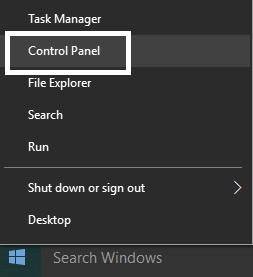
1.Press Windows Key + X then select Control Panel.
2.Now click Hardware and Sound then click on Devices and Printers.

3.Click Add a printer from the top menu.

4.If you don’t see you printer listed click the link which says “ The printer that I want isn’t listed. “

5.From the next screen select “ Add a local printer or network printer with manual settings ” and click Next.

6.Select Create a new port and then from type of port drop-down select Local Port and then click Next.

7.Type the printer’s address in Printers port name field in the following format:
\IP address or the Computer Name\Printers Name
For example \192.168.1.120\HP LaserJet Pro M1136

8.Now click OK and then click Next.
9.Follow on-screen instructions to finish the process.
Method 3: Restart Print Spooler Service
1.Press Windows Key + R then type services.msc and hit Enter.
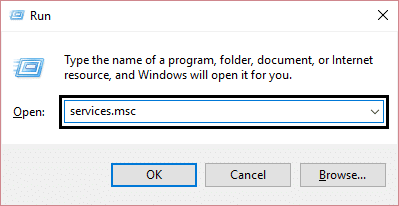
2.Find Print Spooler service in the list and double-click on it.
3.Make sure the Startup type is set to Automatic and the service is running, then click on Stop and then again click on start in order to restart the service.

4.Click Apply followed by OK.
5.After that, again try to add the printer and see if the you’re able to Fix Windows Cannot Connect to the Printer issue.
Method 4: Delete Incompatible Printer Drivers
1.Press Windows key + R then type printmanagement.msc and hit Enter.
2.From the left pane, click All Drivers.

3.Now in the right window pane, right-click on the printer driver and click Delete.
4.If you see more than one printer driver names, repeat the above steps.
- Again try to add the printer and install its drivers. See if you are able to Fix Windows Cannot Connect to the Printer issue, if not then continue with the next method.
Method 5: Registry Fix
1.First, you need to stop Printer Spooler service (Refer to method 3).
2.Press Windows Key + R then type regedit and hit Enter to open Registry Editor.
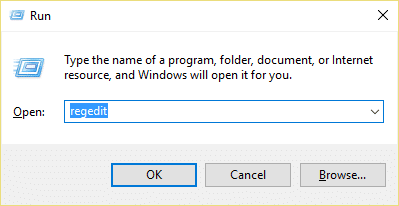
3.Navigate to the following registry key:
HKEY_LOCAL_MACHINE\SOFTWARE\Microsoft\Windows NT\CurrentVersion\Print\Providers\Client Side Rendering Print Provider
4.Now right-click on Client Side Rendering Print Provider and select Delete.

5.Now again start Printer Spooler service and reboot your PC to save changes.
- Fix Windows 10 Update Error 0x8007042c
- Fix Windows Update Error 0x80010108
- How To Fix Error 0X80010108 In Windows 10
- Fix Windows Update Error 0x800706d9
That’s it you have successfully Fix Windows Cannot Connect to the Printer issue but if you still have any questions regarding this article then feel free to ask them in comment’s section.
