The CPU is responsible for processing all the data and for managing all your commands and operations. Due to all the brain-work that a CPU is responsible for, it sometimes gets heated up. Now, if your CPU runs too hot for a very long time, it may cause you a lot of trouble, including sudden shutdown, system crash or even a CPU failure. While the CPU’s ideal temperature is room temperature, a little higher temperature is still acceptable for a short time period. Don’t fret, and the CPU can be cooled down by adjusting fan speeds using Fan Speed Controller Software . But, how would you, in the first place, find out how hot your CPU actually is? So, there are a few “thermometers” for your CPU. Let us see two of such apps, which will tell you what exactly your CPU’s temperature is.

- How to Check Your CPU Temperature in Windows 10
- Core Temp: Monitor Your Computer’s CPU Temperature
- HWMonitor: Check Your CPU Temperature in Windows 10
- What Temperatures are Safe?
- How to keep the Processor cool?
How to Check Your CPU Temperature in Windows 10
Core Temp: Monitor Your Computer’s CPU Temperature
Core Temp is the basic CPU temperature monitoring app that is available for free. It is a lightweight app that enables you to monitor the temperature of each core, and the temperature variations can be seen in real-time. You can download it from alcpu website . To use core temp,
Download Core Temp from the given site.
Launch the downloaded file to install it. Make sure that you uncheck any option to download other extra software with it.
Once installed, you will be able to see the different core temperature in your system tray. To see them, click on the upward arrow on your taskbar.

You will see as many temperatures as the total number of the core of all the processors in your system.
Right-click on any temperature and click on Show/Hide to show or hide the details.

- The Show option will open a new window where you will see more information about your CPU like the model, platform, etc. For every individual core, you will see its maximum and minimum temperatures , which will keep on changing as you use different programs and applications.

At the bottom of this window, you will find a value named ‘ Tj. Max ’. This value is the maximum temperature limit that your CPU shall reach . Ideally, the actual CPU temperature should be lower than this value.
You can also customize its settings as per your needs. For that, click on ‘ Options ’ and then select ‘ Settings ’.

- In the settings window, you will see several options like temperature polling/logging intervals, logging on startup, start with Windows, etc.

- Under the ‘ Display ’ tab, you can customize the Core Temp display settings like field colours. You can also choose to view the temperature in Fahrenheit or hide taskbar button, among other options.

- To customize what is visible at your notification area, move on to ‘ Notification Area ’ tab. Select if you want to see temperatures of all the cores individually or if you only require to see the maximum core temperature per processor.

Additionally, Core Temp has Overheat Protection feature to save you when your CPU is running too hot automatically. For this, click on ‘ Options ’ and select ‘ Overheat protection ’.
Check the ‘ Enable overheat protection ’ checkbox.

- You can choose when you want to be notified and even decide if you want your system to be put to sleep, hibernate or shut down when a critical temperature is reached.
Note that Core Temp shows your core temperature and not CPU temperature. While CPU temperature is the actual temperature sensor, it tends to be more accurate at lower temperatures only. At higher temperatures, when the temperature is rather more critical to us, core temperature is a better metric.
HWMonitor: Check Your CPU Temperature in Windows 10
For those of you who need a better picture of your system temperatures, HWMonitor is an efficient app you should try. With HWMonitor, you can check temperatures of your CPU and your graphics card, motherboard, hard drives, etc. Just download it from this website . If you download the zip file, there is no need for installation. Just extract the files and double click on the .exe file to run it.

You will be able to see all the system details along with CPU temperatures. Note that HWMonitor shows both core temperature as well as CPU temperature.
What Temperatures are Safe?
Once you know your CPU’s temperature, you should know if it is safe for operation or not. While different processors have different permissible temperature limits, here are general approximate temperature ranges that you should know about.
- Below 30 degree Celsius: Your CPU is working too well.
- 30 degrees to 50 degrees: Your CPU is under ideal conditions (for a room temperature around 40 degree Celsius).
- 50 degrees to 60 degrees: This temperature is fine for slightly higher room temperatures.
- 60 degrees to 80 degrees: For load temperatures, anything below 80 degrees works fine. However, you should be warned if the temperature is continuously increasing.
- 80 degrees to 90 degrees: At these temperatures, you should be concerned. CPU running too long at these temperatures should be avoided. Look out for reasons like overclocking, dust build-up and faulty fans.
- Above 90 degrees: These are extremely dangerous temperatures, and you should consider shutting down your system.
How to keep the Processor cool?
The processor performs best when it is cool. To ensure your processor stays cool, consider the following:
- Keep your computer in a cool and ventilated environment while using it. You should ensure that it is not enclosed in tight and close spaces.
- Keep your system clean. Remove dust from time to time to allow efficient cooling.
- Verify if all the fans are working fine. Consider installing more fans if you really need to overclock or if your CPU turns quite hot frequently.
- Consider re-applying thermal paste, which allows heat to be transferred away from the processor.
- Re-install your CPU cooler.
Using the above-mentioned apps and methods, you can monitor or check your CPU temperature and prevent any trouble that high temperatures may cause. Apart from Core Temp and HWMonitor, there are many other apps that you can use to monitor CPU temperature like HWInfo, Open Hardware Monitor, etc.
Recommended:
- What is the Difference Between CC and BCC in an Email?
- Fix Cursor Jumps or moves randomly in Windows 10
- Set up Yahoo email account in Windows 10 Mail App
- Print Spooler Keeps Stopping? Here is how to fix it!
I hope this article was helpful and now you can easily Check Your CPU Temperature in Windows 10 , but if you still have any questions regarding this tutorial then feel free to ask them in the comment’s section.
If you’re facing the error message “ The print spooler service is not running ” when you try to print a document or any file then don’t worry as we are going to see how to fix print spooler keeps stopping on Windows 10 issue . After facing this error, you may try to start the print spooler service but you will notice that it is automatically stopped after a few seconds. It seems like the print spooler service keeps crashing on Windows 10. But before going to fix the issue lets us see what this Print spooler actually is?

What is Print Spooler?
Print spooler is a utility program that comes with the Windows operating system which helps in managing all the print jobs users sent to their printer. The print spooler helps your Windows to interact with the printer, and orders the print jobs in your queue. If the print spooler service isn’t running, your printer won’t work.

Now you might be wondering what is the cause behind this error? Well, there can be many reasons why you’re facing this issue but the main cause seems to be the outdated, incompatible printer drivers. Normally if the print spooler service stops working, it will not pop-up or show any error or warning message. But in this case, you will receive an error message pop-up, so without wasting any time let’s see How to Fix Print Spooler Keeps Stopping Automatically with the help of the below-listed troubleshooting guide.
- Fix Print Spooler Keeps Stopping on Windows 10
- Method 1: Delete content from the Spool folder
- Method 2: Restart your Print Spooler service
- Method 3: Set Print Spooler Service to Automatic
- Method 4: Change the Print Spooler Recovery Options
- Method 5: Update your Printer driver
- Method 6: Take Ownership of spoolsv.exe
- Method 7: Delete unnecessary key from Registry
- Method 8: Reinstall your Printer Drivers
- Method 9: Scan your PC with Anti-Malware
Fix Print Spooler Keeps Stopping on Windows 10
Make sure to create a restore point just in case something goes wrong.
Method 1: Delete content from the Spool folder
Using this approach, you have to delete all the content inside the PRINTERS and drivers folder. This method works for all Windows OS right from Windows 10 till Windows XP. To solve using this approach, the steps are:
1.Open the File Explorer then navigate to the following path: C:\Windows\System32\spool
2.Double-click on “ drivers ” folder then delete all files & folders under it.

3.Similarly, you have to delete all contents from the PRINTERS folder and then restart the “ Print Spooler ” service.
4.Then reboot your system to save changes.
Method 2: Restart your Print Spooler service
In this approach, you have to restart your Print Spooler Services. To do this the steps are –
1.Press Windows Key + R then type “ services.msc ” (without quotes) and hit Enter to open the Services window.
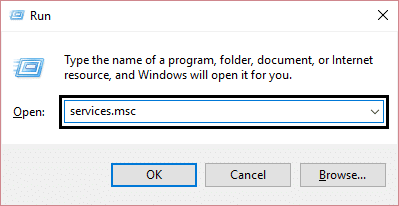
2.Scroll down & look for Print Spooler service and then select it.

3.Right-click on Print Spooler service then select Restart.
4.Now check whether the printer is working or not. If your printer is working then this means you were able to Fix Print Spooler Keeps Stopping on Windows 10 issue.
Method 3: Set Print Spooler Service to Automatic
1.Use the keyboard shortcut key combination Windows key + R to open the Run application.
2.Type “ services.msc ” and hit Enter to open the Services window.

- Right-click Print Spooler & choose the Properties.

4.Change the “ Startup type ” to ‘ Automatic ’ from the drop-down list & then click Apply > OK.

See if you’re able to Fix Print Spooler Keeps Stopping on Windows 10 issue, if not then continue to the next method.
Method 4: Change the Print Spooler Recovery Options
In case the Print Spooler recovery settings are not configured properly, then in case of any failure, the print spooler will not restart automatically. To recover that the steps are –
1.Press Windows Key + R then type service.msc and hit Enter.
2.Right-click Print Spooler & select Properties.
3.Switch to the Recovery tab then make sure the First failure, Second failure, & Subsequent failures are set to “ Restart the Service ” from their respective drop-downs.

4.Then, click Apply followed by OK.
Method 5: Update your Printer driver
1.Press Windows Key + R then type “ services.msc ” and hit enter.
2.Find Print Spooler service then right-click on it and select Stop.

3.Again press Windows Key + R then type printui.exe /s /t2 and hit enter.
4.In the Printer Server Properties window search for the printer which is causing this issue.
5.Next, remove the printer, and when asked for confirmation to remove the driver as well, select yes.

6.Now again go to services.msc and right-click on Print Spooler and select Start.

7.Next, navigate to your printer manufacturer website, download and install the latest printer drivers from the website.
For example , in case you have an HP printer then you need to visit HP Software and Drivers Downloads page . Where you can easily download the latest drivers for your HP printer.
8.If you’re still not able to fix Print Spooler Keeps Stopping issue then you can use the printer software that came with your printer. Usually, these utilities can detect the printer on the network and fix any issues that are causing the printer to appear offline.
For example, you can use HP Print and Scan Doctor to fix any issues regarding HP Printer.
Method 6: Take Ownership of spoolsv.exe
1.Open the File Explorer then navigate to this path: C:\Windows\System32
2.Next, find ‘ spoolsv.exe ’ then right-click on it and select Properties.

3.Switch to the “ Security ” tab.
4.Now under Group and user names choose your user account & then click on the “ Advanced ” button.

5.Now click on “ Change ” next to the current Owner .

6.Now from the “ Select User or Group ” window click on the Advanced button at the bottom.

7.Next, click on Find Now then select your user account then click OK.

8.Again click OK on the next window.

9.You will be again on the Advanced Security Settings window of spoolsv.exe , just click Apply followed by OK.

10.Now under spoolsv.exe Properties window , select your user account (which you selected in step 7) then click on the Edit button.

11.Checkmark “ Full control ” then click Apply followed by OK.

- Restart Print Spooler service (Run > services.msc > Print Spooler).
13.Reboot your system to apply changes and see if you’re able to Fix Print Spooler Keeps Stopping on Windows 10 issue .
Method 7: Delete unnecessary key from Registry
Note: Make sure to back up your Registry just in case something goes wrong then you can easily restore the registry using this backup.
1.Press Windows Key + R then type regedit and hit Enter to open Registry Editor.
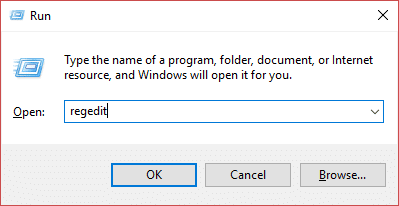
2.Now navigate to the following registry key:
HKEY_LOCAL_MACHINE\SYSTEM\CurrentControlSet\Control\Print\Providers
3.Under Providers you will find two default sub-keys which are LanMan Print Services and Internet Print Provider.

4.Above two sub-keys are the default and should not be deleted.
5.Now apart from the above sub-keys delete any other key present under Providers.
6.In our case, there is an additional subkey which is Printing Services.
7.Right-click on Printing Services then select Delete.

8.Close Registry Editor & Restart Print Spooler service.
Method 8: Reinstall your Printer Drivers
1.Press Windows Key + R then type control printers and hit Enter to open Devices and Printers.

- Right-click on your printer and select “ Remove device ” from the context menu.

3.When the confirm dialog box appears , click Yes.

4.After the device is successfully removed, download the latest drivers from your printer manufacturer’s website .
5.Then reboot your PC and once the system restarts, press Windows Key + R then type control printers and hit Enter.
Note: Make sure your printer is connected to the PC via USB, Ethernet, or wirelessly.
6.Click on the “ Add a printer ” button under the Device and Printers window.

7.Windows will automatically detect the printer, select your printer and click Next.

- Set your printer as default and click Finish.

Method 9: Scan your PC with Anti-Malware
Malware can cause tremendous trouble in printing services. It can corrupt system files or may change any values in the registry. The possibilities of creating issues by malware are endless. So, it is recommended to download and install applications like Malwarebytes or other anti-malware applications to scan for malware in your system. Scanning your PC for malware may fix the Print Spooler stopping issue.
1.Download and install CCleaner & Malwarebytes.
- Run Malwarebytes and let it scan your system for harmful files.
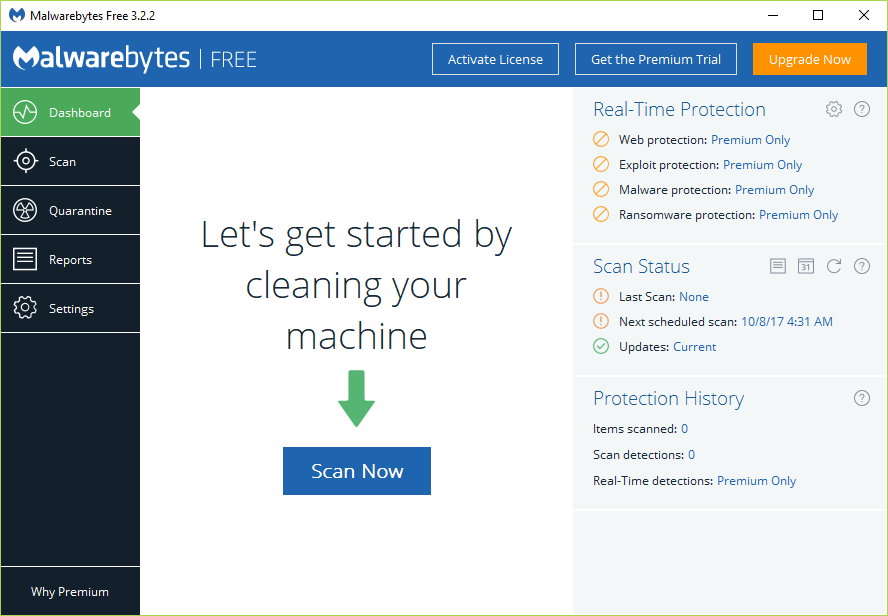
3.If malware is found it will automatically remove them.
4.Now run CCleaner and in the “Cleaner” section, under the Windows tab, we suggest checking the following selections to be cleaned:
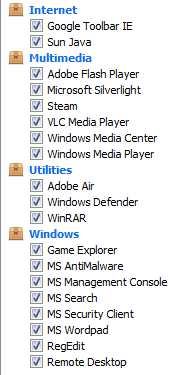
5.Once you’ve made certain the proper points are checked, simply click Run Cleaner, and let CCleaner run its course.
6.To clean your system further select the Registry tab and ensure the following are checked:
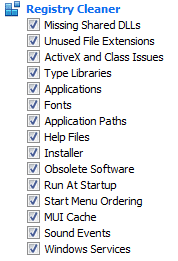
7.Select Scan for Issue and allow CCleaner to scan, then click Fix Selected Issues.
8.When CCleaner asks “ Do you want backup changes to the registry? ” select Yes.
9.Once your backup has completed, select Fix All Selected Issues.
10.Restart your PC to save changes.
Recommended:
- Kill Resource Intensive Processes with Windows Task Manager (GUIDE)
- Clear Clipboard using Command Prompt or Shortcut
- What is a VPN and how it works?
- Install Group Policy Editor (gpedit.msc) on Windows 10 Home
I hope this article was helpful and now you can easily Fix Print Spooler Keeps Stopping on Windows 10 , but if you still have any questions regarding this tutorial then feel free to ask them in the comment section.
